Water is the single greatest threat to the structural integrity of your home. While many property owners worry about catastrophic flooding events, the most common damage is slow, silent, and occurs beneath the surface. In Spartanburg’s climate, where heavy seasonal rains meet dense clay soils, the management of water flow is critical.
The defense against this threat is not just a strong wall, but the land itself. Proper site grading directs runoff away from structures, preserves the stability of load-bearing soils, and prevents the buildup of hydrostatic pressure that leads to cracks, leaks, and costly repairs. At Holly Springs Grading, we prepare land to function as a shield for your foundation.
The Mechanics of Grading and Foundation Protection
To understand how grading protects a building, one must understand how water interacts with the soil surrounding a foundation. When a site is properly graded, it uses gravity to move water away from the home’s footprint. When it is not, water accumulates, creating three primary risks.
Surface Drainage and Pooling
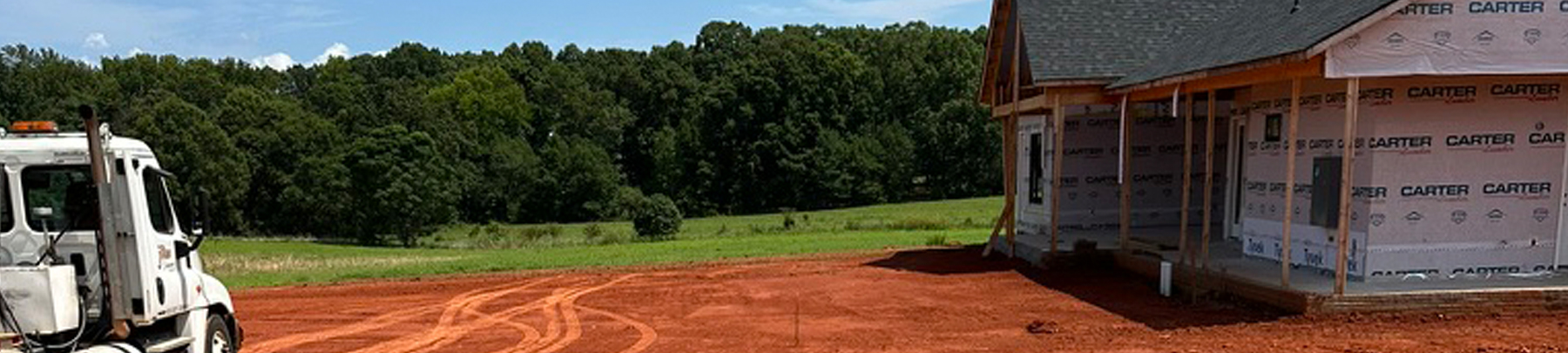
The most visible function of grading is surface drainage. The ground immediately surrounding a home must slope away from the foundation walls. If the grade is flat or, worse, slopes toward the house, rainwater from the roof and surrounding landscape will pool against the footing. Over time, this standing water saturates the soil and finds its way into the smallest imperfections in the concrete or masonry.
Reducing Hydrostatic Pressure
The less visible, yet more dangerous force, is hydrostatic pressure. When the soil surrounding a basement or crawlspace becomes saturated, the water within that soil exerts immense pressure against the foundation walls. This pressure can weigh thousands of pounds. Eventually, this force will push water through solid concrete, creating dampness, or it will crack the wall entirely to relieve the pressure.
Correct grading creates a slope that sheds water before it can saturate the backfill soil. By keeping the soil directly against the foundation drier, we significantly reduce the hydrostatic pressure exerted on the structure.
Preserving Soil Integrity
Foundations rely on the stability of the soil beneath them. Improper grading can lead to erosion and washouts that undermine footings. Furthermore, when water is allowed to pool and then dry out repeatedly, it changes the load-bearing conditions of the soil. This cycle can cause differential settling, where one part of the house sinks faster than another, tearing the structure apart from the bottom up.
Why Spartanburg’s Geology Increases Risk
In Spartanburg County, local environmental factors make precise grading even more essential. Our region presents specific challenges that generic grading practices often fail to address.
The Challenge of Clay Soil
Much of the upstate region sits on red clay or mixed clay soils. Clay is expansive. When it gets wet, it swells significantly; when it dries, it shrinks. This expansion and contraction cycle exerts dynamic stress on foundations. If grading does not prevent water from saturating the clay near a foundation, the soil will expand and push against the wall with tremendous force.
Topography and Slope
Many properties in our area are situated on sloped lots. Without professional grading, runoff from higher elevations can concentrate directly against a foundation. Managing this water requires more than just flattening a spot for a house; it requires the installation of swales and strategic slopes to intercept and redirect water flow before it reaches the building.
Seasonal Rainfall Intensity
Spartanburg experiences periods of heavy, intense rainfall. A grading plan that works for a light drizzle may fail during a summer storm. Our grading and approach are forward thinking a designed to handle high-volume water events, ensuring that even during a downpour, the water is moving away from your investment.
Identifying Grading Failure
Water damage does not always appear as a flooded basement. Often, the signs are subtle indicators that your exterior grading is failing.
- Pooling Water: If you observe puddles forming near the foundation after a rainstorm, the grade is likely insufficient.
- Musty Odors: A persistent damp smell in a basement or crawlspace indicates that moisture is migrating through the walls.
- Efflorescence: White, chalky powder on masonry walls is a sign that water is evaporating off the surface, leaving mineral deposits behind.
- Structural Cracks: Stair-step cracks in brick or horizontal cracks in foundation walls suggest shifting soil or excessive hydrostatic pressure.
- Sump Pump Overactivity: If your sump pump runs frequently, it indicates that the perimeter drain system is overwhelmed by groundwater that should have been diverted at the surface.
The Holly Springs Grading Approach
At Holly Springs Grading, we view site preparation as the first step in the structural integrity of a building. We do not simply move dirt; we engineer drainage solutions. Our process ensures that your land is prepared for longevity.
Comprehensive Site Assessment
Most every project begins with an evaluation of the specific terrain. We analyze soil composition, existing drainage patterns, and lot slope. We identify where water is coming from and where it needs to go to leave the property safely.
Precision Design and Slope
We adhere to strict standards for finished grades. Typically, we aim for a minimum 5% slope away from the foundation for the first 10 feet, site conditions permitting. We design swales and berms to intercept runoff from neighboring properties and route it to appropriate outfall locations.
Compaction and Stability
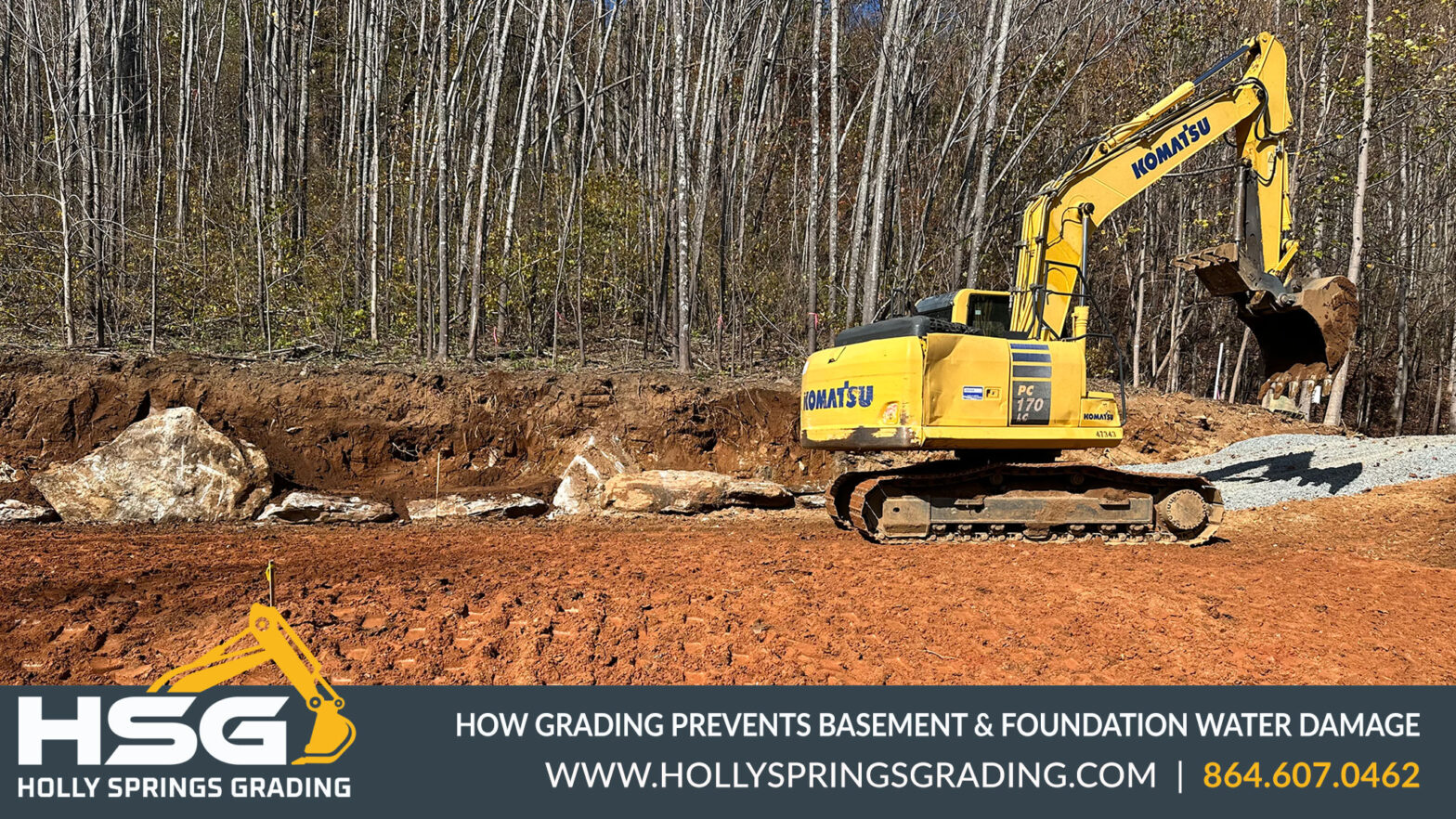
Simply piling dirt against a foundation is not grading. If the backfill is not properly compacted, it will settle over time. This settling creates a trough right next to the wall that collects water—the exact opposite of the intended goal. We utilize heavy equipment to ensure proper compaction, maintaining the correct slope even after the soil settles.
Downspout Management
Roof runoff is a massive contributor to foundation water. A 1,000-square-foot roof sheds roughly 600 gallons of water during a one-inch rain. We grade the site to accept this discharge and route it away from the home.
Erosion Control
A perfect grade is useless if it washes away. We implement erosion control measures, including silt fencing and stabilization via hydroseeding or straw mulch, to keep the soil in place until permanent vegetation is established.
When Surface Grading Requires Support
While surface grading is the first line of defense, some properties require additional systems. In cases where the water table is high or the topography is aggressive, we evaluate the need for subsurface solutions. This may include French drains, curtain drains, or dry wells. By combining precision grading with subsurface drainage, we provide a comprehensive water management system.
Actionable Steps for Property Owners
Maintenance is key to preserving the work done during the grading process. Homeowners should regularly inspect their property to ensure the drainage system remains effective.
- Monitor the Grade: Over several years, soil may settle. If you notice the ground flattening out near the house, it may need to be built back up.
- Manage Gutters: Keep gutters clean. Clogged gutters overflow, dumping water directly onto the foundation, bypassing the grading work entirely.
- Extend Downspouts: Ensure downspouts extend at least 4 to 6 feet away from the foundation.
- Hardscape Carefully: When installing patios or walkways, ensure they maintain a positive slope away from the structure.
Secure Your Foundation
The stability of your home or commercial building starts with the ground it sits on. Ignoring drainage issues inevitably leads to structural damage that is far more expensive to fix than the cost of proper site preparation.
Experience the difference that comes with working with a strategic partner. Holly Springs Grading brings local knowledge, precision equipment, and a commitment to quality to every project in Spartanburg County. If you suspect your grading is compromising your foundation, or if you are planning new construction, contact us for a professional site assessment.
Contact Us today by phone at 864.607.0462 or through our website contact form.
While we have been meeting the needs for residential home development for decades, our web presence is pretty new. We invite you to join us on your favorite social media. Facebook | LinkedIn
